Error and Misprint Pokemon Cards: Which Mistakes Are Worth Money?
Guides · Published 2026-07-28 · 7 min read · by Sándor
Printing mistakes happen at industrial scale, and a small subculture of collectors pays real money for the good ones. The key word is "good": most flaws make a card worth less, not more. Here is an honest framework for telling the difference.
The three tests every valuable error passes
- It's dramatic. The error should be visible from across the table: a card cut so far off that the neighbor shows, a crimp line from the packaging machine, a missing holo layer, ink in the wrong place. Subtle flaws read as damage, and the market treats them as damage.
- It's on a card people want. An error multiplies existing demand; it doesn't create demand from nothing. The same miscut is worth far more on a Charizard than on a common nobody searches for.
- It's scarce and documented. The best errors come from a specific print window, got noticed, and were catalogued by collectors. A documented variety with a name attracts bidders; a one-off oddity attracts suspicion.
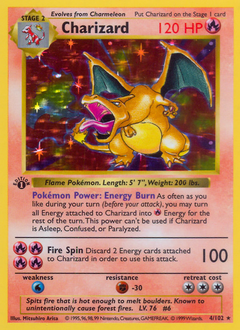
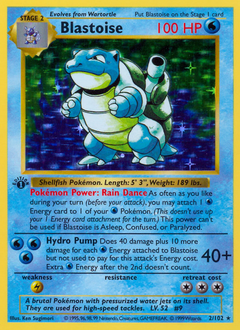
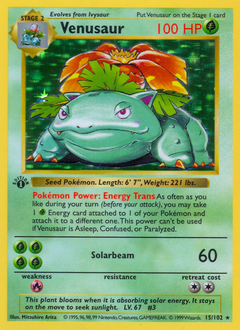
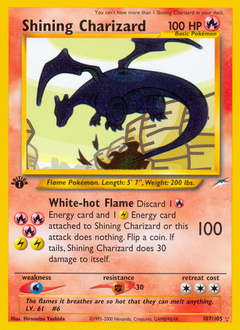
Vintage holos like these are where documented errors matter most: the base card already carries value, so a genuine printing mistake multiplies something real.
The main error types, ranked by how the market treats them
Strong interest
- Named print-run errors. Documented varieties from a known window, where part of the run shipped wrong. Our own price feed carries an example: TCGplayer lists the Base Set Charizard "Black Dot Error" as its own product, separate from the standard printing. When an error is distinct enough to get its own market listing, it has collector demand by definition.
- Dramatic miscuts. Sheet-edge cards and multi-card slivers have a dedicated buyer base, especially on vintage stock.
- Missing layers. Cards that skipped a printing stage entirely (no holo where holo belongs, missing ink passes) are unmistakable and hard to fake convincingly.
Modest interest
- Crimps. Factory crimp lines prove the pack sealed around the card, which collectors like as evidence, but the card itself is damaged goods. Value depends heavily on the card underneath.
- Ink spots and print dots. Common enough that most trade as curiosities at small premiums, if any.
Negative value
- Mild off-centering, roller lines, holo scratches. These are condition defects. A grader scores them down, and buyers discount them. Hoping a flaw is "an error" is the most common way to overvalue a damaged card.
Authentication is the whole game
Anything that can be faked after production will be. Trimmed edges imitate miscuts, and holo layers can be scratched off deliberately. Start by comparing your card with the true printing (the reference image and live price for every card sit on its card page), read up on whether your variety is documented, and lean on grading for anything you plan to sell: a slab that names the error settles the argument before it starts. Our counterfeit guide covers the physical checks that apply here too.
FAQ
Are error Pokemon cards worth money?
Some are, most aren't. Value needs three things at once: the error is dramatic and visible at a glance, it appears on a card people already want, and it exists in small numbers. A minor print dot on a common fails all three. A well-known documented error on a chase card can trade above the normal version.
Is a miscut Pokemon card valuable?
Mildly off-center cards are condition problems, not collectibles, and grade worse than clean copies. Dramatic miscuts that show a neighboring card or a large slice of the sheet edge are a real niche with real buyers. The more obvious the mistake, the better.
How do I know if my error card is genuine?
Compare it against the normal printing first (every card's reference image is on its Ripdex page), then look for documentation: known error varieties are catalogued and discussed by collectors. Be careful with 'errors' that are easy to fake after production, like scratched-off holo layers or trimmed edges.
Should I grade an error card?
Graders authenticate and label many known error varieties, and a slab helps a lot at sale time because it proves the error left the factory that way. For a dramatic error on a desirable card, grading is usually worth it. For minor flaws, the fee outweighs the upside.