Pokemon Card Condition Guide
Learn to accurately grade your Pokemon cards. Pokemon card grading (judging condition honestly) is essential for proper pricing and fair trading: the same card can be worth 10× more in Near Mint than Damaged.
Quick Reference Chart
| Condition | Abbreviation | Description | Typical Value |
|---|---|---|---|
| Near Mint | NM | Perfect or nearly perfect condition | 100% Market Value |
| Lightly Played | LP | Minor wear, still looks great | 75–90% Market Value |
| Moderately Played | MP | Visible wear but still presentable | 50–75% Market Value |
| Heavily Played | HP | Significant wear and damage | 25–50% Market Value |
| Damaged | DMG | Major damage: creases, tears or writing | 10–25% Market Value |
Near Mint (NM)
100% Market Value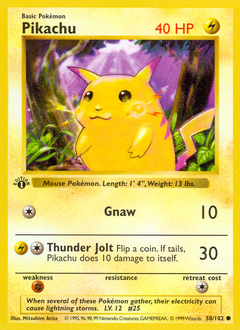
Characteristics
- Sharp, crisp corners
- Clean, unblemished surface
- No visible wear or scratches
- Pristine edges and borders
- May have minor printing imperfections only
Near Mint cards command full market value. This is the condition our listed prices assume; most online sales and price guides reference NM copies.
Lightly Played (LP)
75–90% Market ValueCharacteristics
- Slight edge wear or minor whitening
- A few light surface scratches visible under bright light
- Corners still mostly sharp
- No creases or bends
LP cards typically sell for 75–90% of the NM market price. Often the sweet spot for collectors who want the card, not the grade.
Moderately Played (MP)
50–75% Market ValueCharacteristics
- Noticeable edge wear and whitening
- Moderate surface scratching
- Softened corners
- Possible minor border wear on both faces
MP cards usually trade at 50–75% of market value. Fine for binders and play (sleeved), less attractive for resale.
Heavily Played (HP)
25–50% Market ValueCharacteristics
- Heavy whitening on edges and corners
- Major surface wear or scuffing
- Possible light creases
- May have minor water damage or stains
HP cards fetch roughly 25–50% of market value. Vintage chase cards can still carry real money even at HP.
Damaged (DMG)
10–25% Market ValueCharacteristics
- Visible creases or folds
- Tears, missing pieces or heavy stains
- Writing or stamps on the card
- Severe edge and surface damage
Damaged cards sell for 10–25% of market value, driven almost entirely by the card's desirability rather than its condition.
How to Grade Pokemon Cards: Pro Tips
What to Look For
- Check corners under bright, angled light
- Look for whitening on the card back's edges first
- Tilt the card to spot surface scratches on holos
- Run a finger gently along edges to feel for dings
Best Practices
- When in doubt, grade one step lower; buyers and grading companies will judge it at least that strictly
- Sleeve and toploader anything worth more than a few dollars
- Photograph both faces before selling or trading
- Compare against the market price for the stated condition
Use This Knowledge With Our Tools
PSA Grading Cost Guide
Is grading worth it? Tiers, fees and break-even math
Card Value Calculator
Check the NM market price, then apply the condition multiplier
Trade Calculator
Compare both sides of a trade at market value
Spot Fake Cards
Eight checks that catch counterfeits before you pay
All Tools
Every free Ripdex tool in one place
Grade faster with your camera
Scan any card with Ripdex to identify it instantly, then judge its condition against the market price on the spot.
Download Ripdex Free