How to Spot Fake Pokemon Cards
Counterfeits have gotten better, but they still fail the same handful of checks. Run these eight in order. Most fakes fall at the first two.
1. The Light Test
Hold a bright flashlight flat against the card's face. Real Pokemon cards have an opaque middle layer, so only a dull glow passes through; most fakes are printed on cheap cardstock that lights up like paper. This is the single fastest test for vintage-era fakes.
2. Check the Card Back
The back is where counterfeits fail most often. On a real card the blue is a rich, detailed swirl with crisp Poké Ball artwork; fakes tend toward washed-out or purple-ish blue, blurry edges and off-center borders. Compare side by side with any card you know is real.
3. Font & Spelling
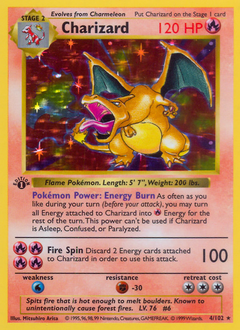
Compare the energy symbols, HP text and attack text against the real card's image. Fakes routinely use slightly wrong fonts, cramped spacing, wrong accent on 'Pokémon', or absurd values. A card claiming 1000 HP or a nonexistent attack is fake, full stop.
4. Texture & Finish
Real cards have a matte, slightly textured finish; many fakes feel glossy, slippery or flimsy. Modern real holos also have precise, patterned foil, while fake holo tends to be a uniform rainbow sheen applied over the whole face.
5. Holo Pattern & Rarity Logic
Know what should be holo: if a card is foil in places the real printing isn't (or an entire 'booster box' of every-card-holo appears), that's counterfeit. Check the real card's rarity and appearance in our database before trusting an unusual-looking copy.
6. Print Quality Under Magnification
Real cards are printed with sharp offset rosette patterns; fakes viewed with a loupe or macro camera often show fuzzy dot patterns, banding or pixelation, especially in text and fine artwork lines.
7. Weight & Layering
Real cards sit around 1.7–1.9 g with a firm snap when flexed gently between fingers. Paper-thin or plasticky-stiff cards are suspect. Never crease-test a card you might keep; the other checks are enough.
8. The Price Red Flag
Counterfeits are usually sold at prices that make no sense. Check the card's live market price first: a '$500 card' offered at $30, sellers with stacks of identical rare cards, or stock-photo-only listings are classic counterfeit patterns.
Compare Against the Real Card
Search any card to see the authentic printing's artwork, set number, rarity and current market price: the reference for every check above.
Fake Card FAQ
How can I tell if a Pokemon card is fake?
Run the quick checks in order: light test (real cards barely let light through), card-back color and sharpness, fonts and spelling, texture, and holo pattern. Comparing your card against the real printing's image and current market price catches most fakes in under a minute.
Are fake Pokemon cards worth anything?
No. Counterfeit cards have no collector or resale value, and knowingly selling them is illegal in most countries. If you bought one, report the seller to the marketplace.
Do fake Pokemon cards show up in graded slabs?
Grading companies reject counterfeits, which is one reason graded vintage cards carry premiums: the slab itself is authentication. Be wary of fake slabs though, and verify the certification number on the grading company's own website.
Can an app detect fake Pokemon cards?
A scan can't physically authenticate cardstock, but it helps two ways. Ripdex identifies exactly which card and printing you're holding so you can compare artwork, fonts and holo treatment against the real version. It also shows the live market price, which exposes the too-good-to-be-true listings where most fakes are sold.
Identify the exact card in one scan
Scan any card with Ripdex to pull up its real printing and live market price, the fastest way to sanity-check a deal before you pay for it.
Download Ripdex Free